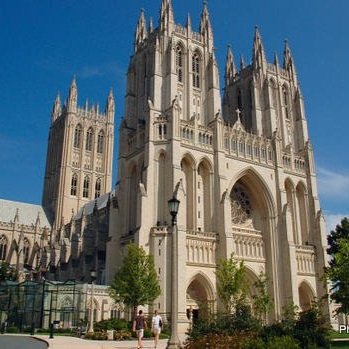
Welcome to Christ Church.
Please Join Us.
Are you looking for something deeper and richer in your life?

What are some reasons for joining a community of faith?
Become part of something worthwhile. Serve with us in causes and communities that are larger than just you. Feel the joy of Christian fellowship. Work hard for high and noble causes.
Discover your purpose and your meaning. When you realize what God intends for you, and what Jesus actually did for you, it changes everything.
Ceremonies and Rituals. Some of life's milestones should be solemn and sacred occasions. Some should be joyous and beautiful—backed up with a thundering pipe organ. We have the rituals, the words, the symbols (and the organ).
“The two most important days in your life are the day you are born and the day you find out why.”
Religion is the keeper of timeless values, cultural traditions, and noble truths. We teach concepts that you can steer by and pass on to your children. In this fast-changing, frenetic world we need to anchor ourselves, hear the classic stories, and understand the deep symbolism behind our Christian culture.
Add strength to your family. Learn and share convictions born of timeless and universal love. Mark the seasons with rituals that have been around since the dawn of civilization. Celebrate the holidays by doing something more profound than eating and drinking too much.
Ask God for what you need! Have a place of refuge. Reach out. Learn to pray. Call on clergy. Meet friends who will love and accept you without any conditions—as Christ loves you.
“You will find harder truths, and older forms of wisdom than the modern world can supply.”
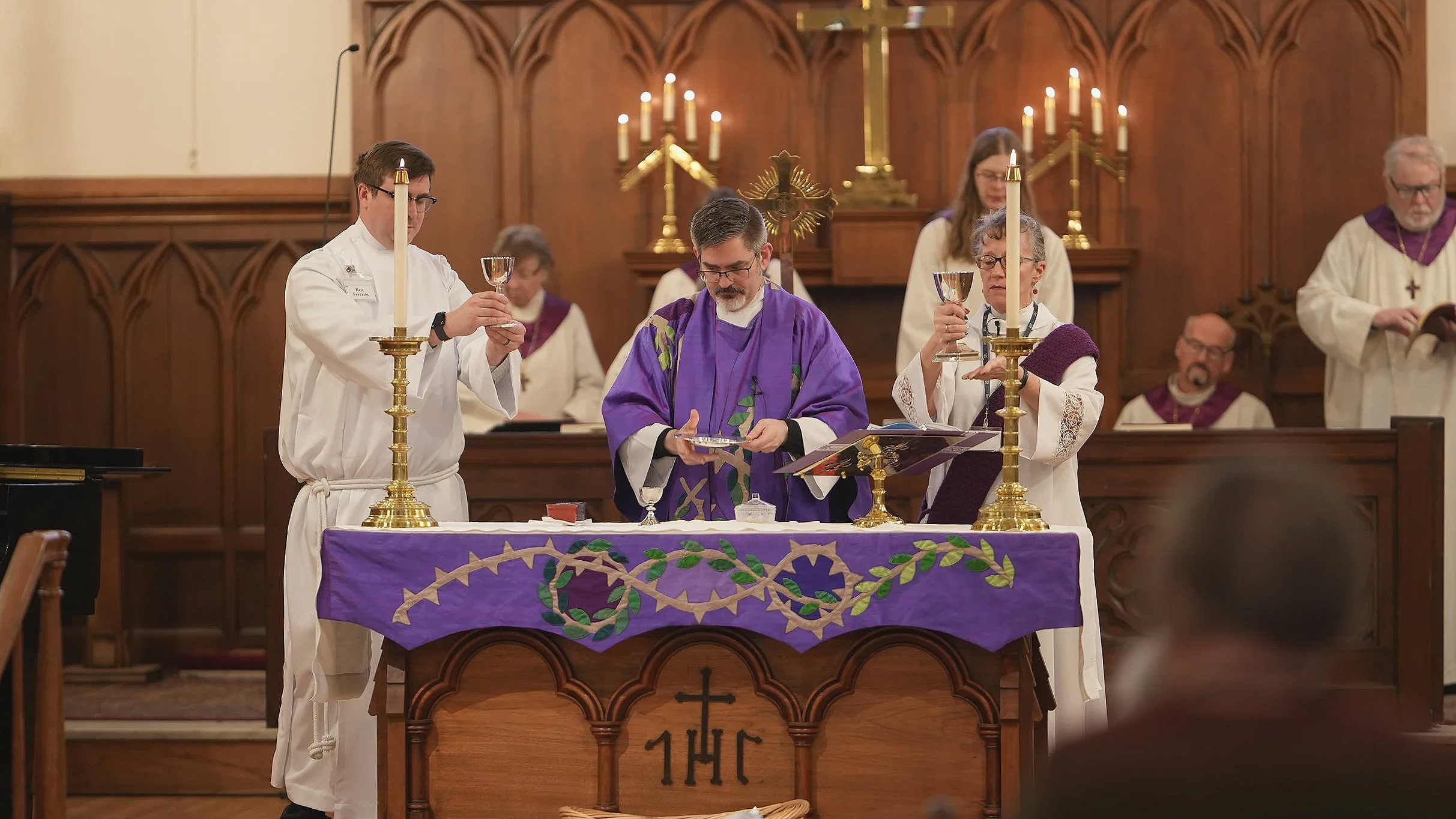
Christ Episcopal Church is an affirming and inclusive Christian community. Our members and leaders welcome all people just as God created them. We do this through love, worship and service.
You are welcome here no matter where you are on your journey of faith. Our welcome knows no boundaries of age, race, ethnicity, culture, gender, gender identity, sexual orientation, physical ability, political affiliation, mental ability, socio-economic status, or any other categorization that has been used to hurt and alienate others.
God delights in the diversity of creation and we strive to create a safe, healing and transforming place for all to enter and share the love of God with us.
It's OK to ask hard questions. It's OK to have doubts.
On the Sunday after Easter, churches everywhere read the same passage: John 20, the story of Thomas — the one disciple who wasn't there when the risen Jesus first appeared.
The others tell him an impossible story: Jesus is alive. They've seen him.
Thomas isn't buying it. He demands proof — wants to see Jesus, see the wounds himself, reason his way to belief before he'll let himself hope it's true.
In some churches, that's where you might be scolded: Don't be a doubting Thomas. So you swallow the question, push it down, and your faith freezes right where it stood. Stuck in confusion. Stuck in doubt.
Not here.
In the Episcopal Church, we know doubt isn't a failure of faith — it's the shape faith takes in anyone paying attention. Every great religious leader has wrestled with doubt. Every serious theology dances with mystery instead of resolving it. So instead of hiding from that tension, we speak it out loud, at the most sacred moment of our service:
We proclaim the mystery of our faith:
Christ has died.
Christ has risen.
Christ will come again.
Not "we admit it's a mystery." We proclaim that it’s a mystery. Because wrestling with mystery — not explaining it away — is how faith matures.
Maybe there are things we aren't meant to fully understand. Maybe too much clarity would flatten the very mystery that gives faith its depth. Or maybe not. Either way, we're called to wrestle with it — bad hip and all, like Jacob at the river. Jesus never promised an easy road: the path is narrow.
It takes courage to face your doubts but that struggle might be the truest form of worship there is.
Don't let your questions keep you from the joy of Christ's message. Dive in. Pursue love without flinching. Take the mystery, the difficulty, and the richness — all of it.
Join us. Come find out what "awesome" actually means.

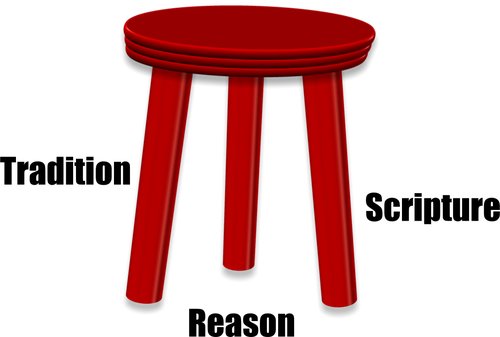
We rely on a balance of Scripture, Tradition and Reason to explain life's mysteries
Episcopalians value Scripture, Tradition and Reason equally. We often use the metaphor of a three-legged stool, with each leg of the stool contributing equally to our balanced approach.
The Anglican approach to reading and interpreting the Bible is unique compared to many other denominations. While we, like all Christians, acknowledge the Bible (or the Holy Scripture) is the Word of God and that the Bible is completely sufficient to our reconciliation to God, we strongly believe that the Bible should be considered in the context of our own time and place, and interpreted with reverence toward those who have gone before us.
Christianity has amassed two thousand years of experiencing God, of studying scripture, and of following Jesus. What these wise and loving people have passed on to us through the centuries cannot be dismissed. It is critical to our understanding and our behavior. They gave us guidance to continue the dialogue.
The sixteenth century Anglican theologian Richard Hooker first proposed this model. It strikes a balance between the Puritan doctrine that the bible needs no interpretation at all (we believe that a doctrine of biblical inerrancy can be a hindrance to spiritual growth and rarely a help) and an over-reliance on tradition (some churches are so steeped in ritual and order that it’s difficult to understand the underlying message of Christ).
Episcopalians believe that every Christian must build a personal understanding and relationship with God. This relationship is what God most desires from us. To do that, God has given us intelligence and our own experience, which we refer to as “Reason.” Based on the text of the Bible itself, and what Christians have taught us about it through the ages, we then must sort out our own understanding of it as it relates to our own lives.
“I do not feel obliged to believe that the same God who has endowed us with sense, reason, and intellect has intended us to forgo their use.
— Galileo Galilei (1564-1642)
We are not afraid of a challenge.
Episcopalians have always valued the life of the mind and we maintain a frank dialogue with fields of secular study. Isaac Newton was an Anglican clergyman and theologian, as were several of the founders of the Royal Society, which was the earliest institution organized for the promotion of science. Charles Darwin studied at the University of Cambridge to become an Anglican clergyman and agonized over the effects his theory would have on traditional church teachings.
The Episcopal Church maintains this tension. We seek the truth as it is, not as we would like it to be. We routinely require our clergy to hold university, as well as seminary, degrees, and we support many university groups, editorial discussions, and encourage a lively debate.
We are both Protestant and catholic*
So what does that mean? The Episcopal Church is sometimes referred to as the “middle way,” since it contains elements of both the Roman Catholic and Protestant traditions.
The Protestant Episcopal Church of America stands squarely in the Reformed, or Protestant, tradition. We are as equally descended from early Christianity as the Roman Catholic or Eastern Orthodox churches.
While our worship is quite similar to the Roman Catholic tradition, we put our own spin on it, and we do not recognize a single authority, such as the Pope.
*The word catholic (with a small "c") comes from the Greek kata meaning “throughout”, and holos, meaning “whole”. It was originally used by Ignatius of Antioch as early as the year 100 to precisely include all followers of Jesus and can be defined as "all-embracing, inclusive".
Who is the Head of the Church?
Well, Jesus is the head of the church—there is no other choice. But he's counting on us to do his work of love here on Earth. So, to accomplish this, we need some type of organization. Here's how we Episcopalians choose to set it up:
The term "Episcopal" , which is a Greek word, simply means "to have bishops", so it's an adjective, not a noun. Bishops in the American Episcopal Church are elected by individual dioceses and are consecrated into the "Apostolic Succession".
We feel that these two concepts are very important:
The highest church leadership is elected by us, the members whom they serve.
Our clergy form an unbroken line of love, charity, and leadership that traces back to the original Apostles of Jesus. When a Bishop blesses and lays hands on a new priest, the line extends all the way back to Jesus.
For five decades—since 1974—the Episcopal Church has ordained women to the priesthood, with full authority and access to the highest levels of leadership.
We believe the church, our society, indeed our world, needs strong feminine wisdom and leadership. Women hold the deepest love the world knows: the bond between mother and child. Women are natural leaders in raising collective consciousness. Women carry the vibration of creation itself and embody a pure, quiet power. Nurturing and forgiving, brave and fierce—women belong in the work of Jesus at the most fundamental level.
“I simply argue that the cross be raised again at the center of the marketplace as well as on the steeple of the church.
I am recovering the claim that Jesus was not crucified in a cathedral between two candles, but on a cross between two thieves, on the town garbage heap, on a crossroads so cosmopolitan that they had to write his “title” in Hebrew and in Latin and in Greek; at the kind of place where cynics talk smut, and thieves curse, and soldiers lie and gamble.
Because that is where he died. And that is what he died about. And that is where church folks should be and what church folks should be about.”

Who is the head of the EPISCOPAL Church?
The Rt. Rev. Sean Rowe, Presiding Bishop of the (National) Episcopal Church
2024 -

Bishop Michael Curry, Presiding Bishop of the (National) Episcopal Church
2015 - 2024

“Male and Female God created them, Male and Female we ordain them.”
Katherine Jefferts-Schori, Presiding Bishop of the (National) Episcopal Church 2006-2015
“When I started attending an Episcopal church in college I first saw women wear the robes of the clergy, give homilies, and offer the Eucharist. At first it felt strange and transgressive. After a while it felt normal. And a while after that, it felt vital. I could weep thinking of what it means to me to see someone who looks like me in the vestments of the church.”
— Lauren Wilford
Both lay (non-ordained) and clergy share leadership in the Episcopal Church. The Vestry is the governing body of our church and oversees the property and assets, approves all major initiatives and expenditures, and can actually remove a rector with the approval of the Bishop. The Rector is a priest, who usually has education outside of theology, and who is charged with the day to day administration of the worship, structure, and music of the church. The rector, hires, fires, and manages the entire staff.
Every parish is connected to an even larger structure, but is autonomous in many respects. The basic unit of ministry in the Episcopal Church is the "diocese," which is simply a region of a reasonable number of Episcopalians that can be managed by one experienced, God-fearing, human being. So each diocese is presided over by a "diocesan Bishop" who may have help from a variety of other kinds of bishops, depending on the circumstances.
The Diocesan Bishop chooses and ordains priests and deacons to serve the "parishes," or congregations, of the diocese, which carryout the ministry of the diocese in their local communities. The priests lead the parish in worship, make decisions related to the sacramental life of the parish, and in general, supports the ministry of the worshiping Christians there.
The Episcopal Church is governed by a Constitution and a set of laws (known as "canons") which it establishes for itself by Convention, but the diocesan bishop is the ecclesiastical (or "church") authority in his or her particular diocese. The bishops of the Episcopal Church have no jurisdiction outside of their dioceses, so they meet together twice per year to pray and make decisions about the life of the Church. Every nine years, the Church elects a "Presiding Bishop" who represents the Episcopal Church in the Anglican Communion and "presides" over meetings of the bishops, known as the "House of Bishops."
Every three years, delegations (or "deputations") from all the dioceses, along with the House of Bishops, gather to worship and pass legislation for the Church. This General Convention is where broad decisions are made about policy and worship, as well as revitalizing the Christian community for ministry "back home."

The Very Rev. Craig Loya - Presiding Bishop of the Diocese of Minnesota

“The fact that religions through the ages have spoken in images, parables, and paradoxes means simply that there are no other ways of grasping the reality to which they refer. But that does not mean that it is not a genuine reality, and splitting this reality into an objective and a subjective side won’t get us far.
”